SHADWICK crestSHADWICKRESEARCH CENTERRequest Full Study ↗
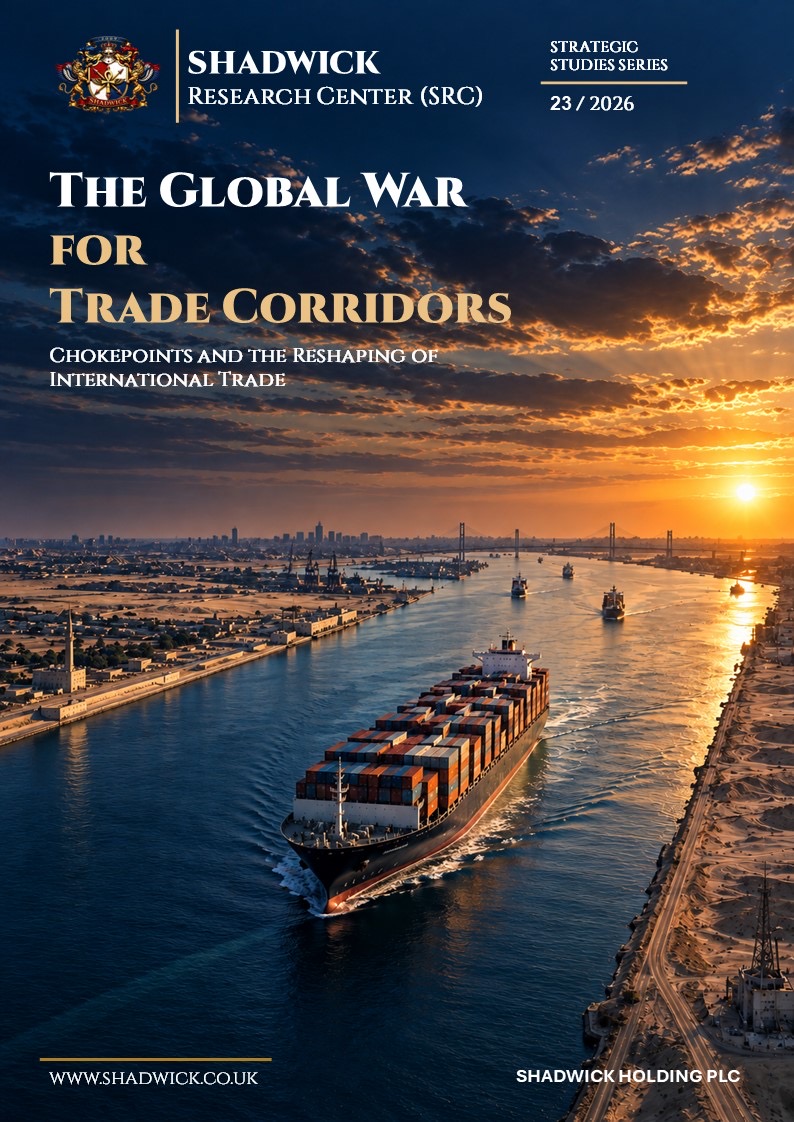
The Global War for Trade Corridors — publication cover
A Message from Our Chairman

Trade corridors have become instruments of economic power.

The global economy is entering an era in which geography once again shapes national resilience. Maritime chokepoints are no longer simply passages for vessels; they are strategic systems linking energy, industry, food security, finance and international influence.

This study examines how disruption at Suez, Bab el-Mandeb and other vital corridors can transmit costs across continents—and why secure, reliable trade routes have become a central concern for governments, investors and industry.

For Egypt, the opportunity extends beyond transit. The strategic task is to convert location into lasting national value through logistics, industry, energy, services and intelligent infrastructure.

Shady Abo El-FetouhChairman & Group Chief Executive Officer

Eng. Shady Abo El-Fetouh
Strategic Studies Series · 23 / 2026

Chokepoints and the reshaping of international trade.

A visual preview of the study’s central thesis: how maritime security, supply-chain resilience and economic power are converging around the world’s most important trade routes.

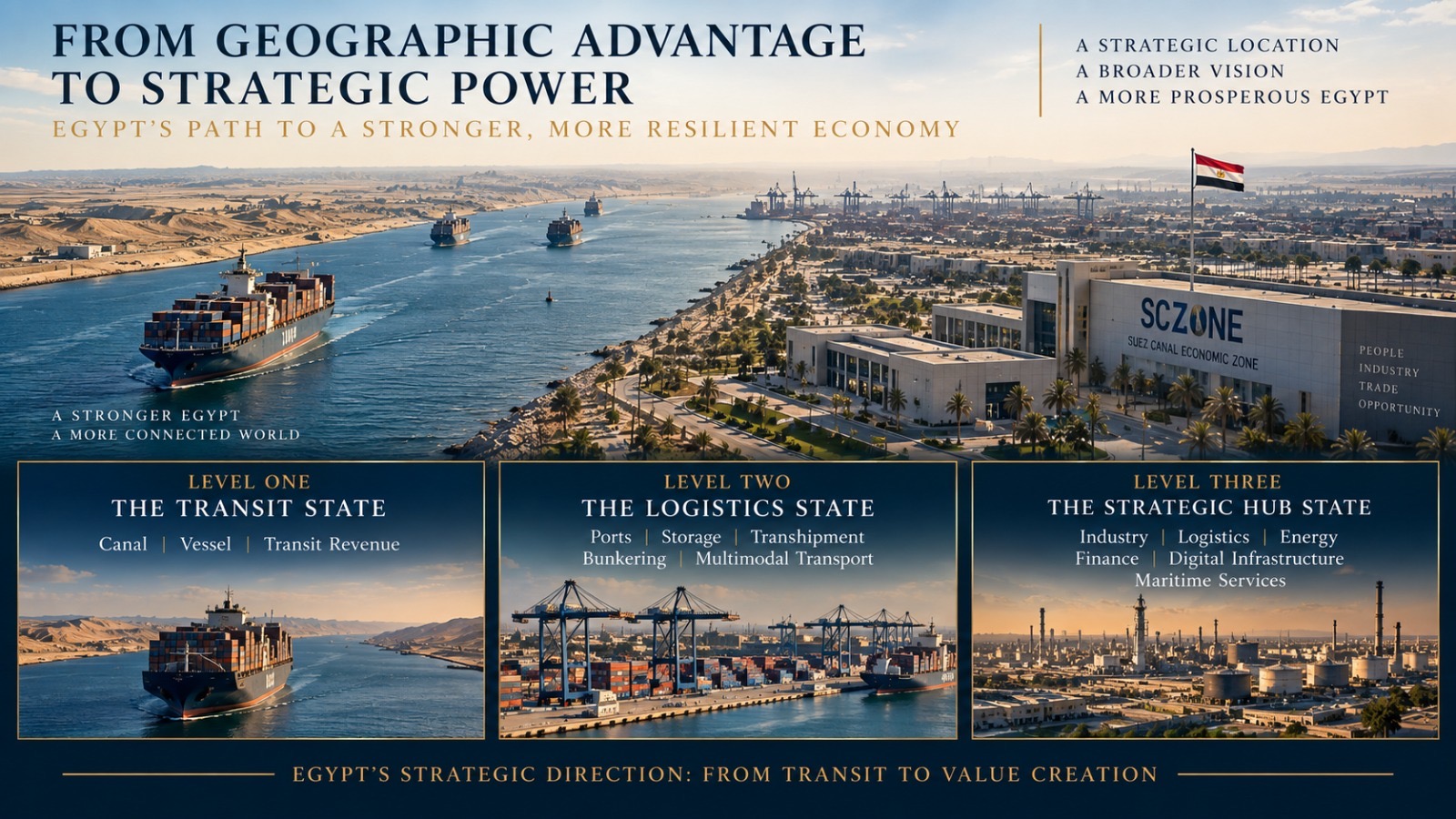
From Geographic Advantage to Strategic PowerClick to enlarge ↗
Egypt’s Strategic Direction

From Geographic Advantage to Strategic Power

Egypt can move beyond transit revenue by connecting the Suez Canal to ports, logistics, storage, industry, energy, finance and digital infrastructure—capturing more value from the trade crossing its geography.

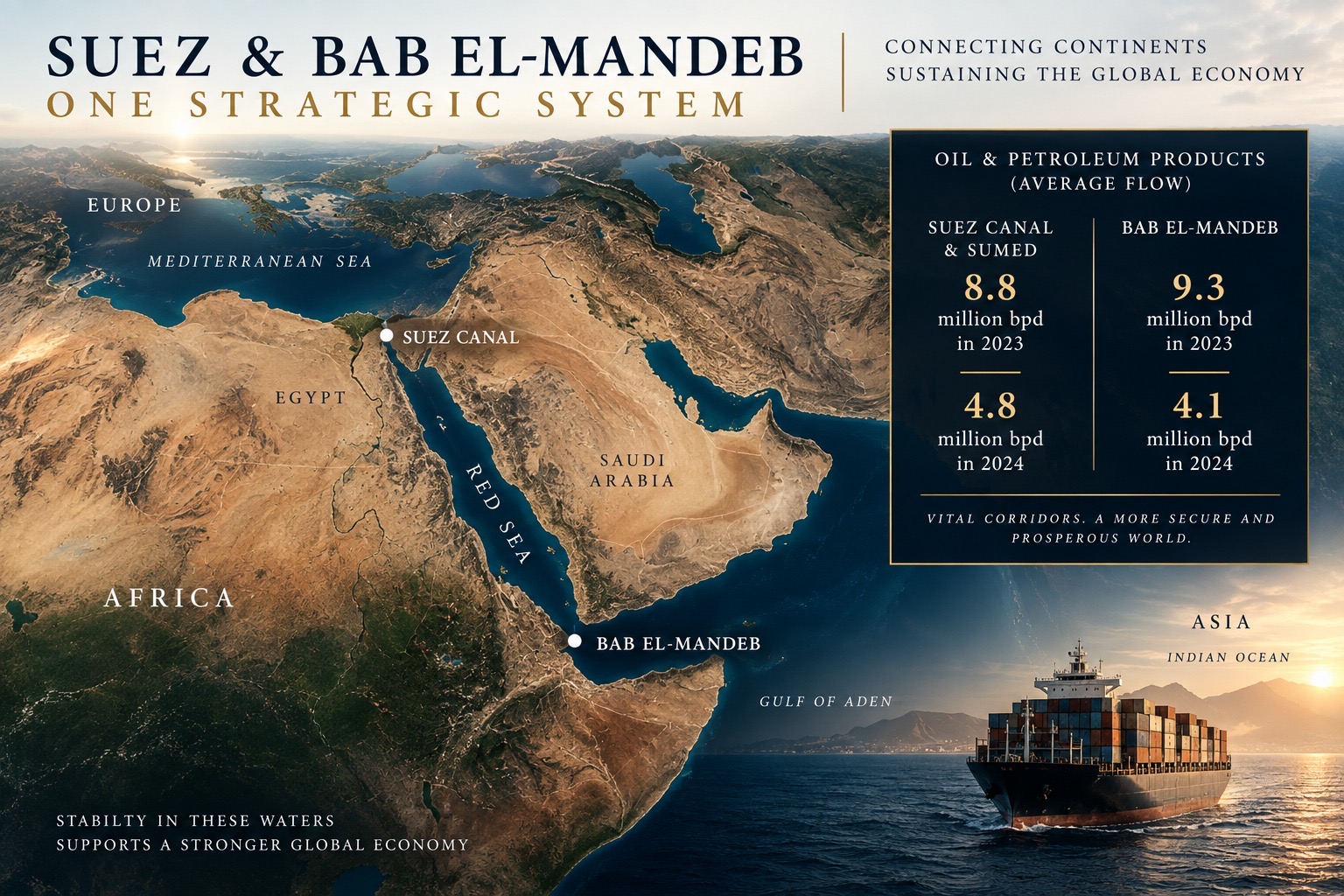
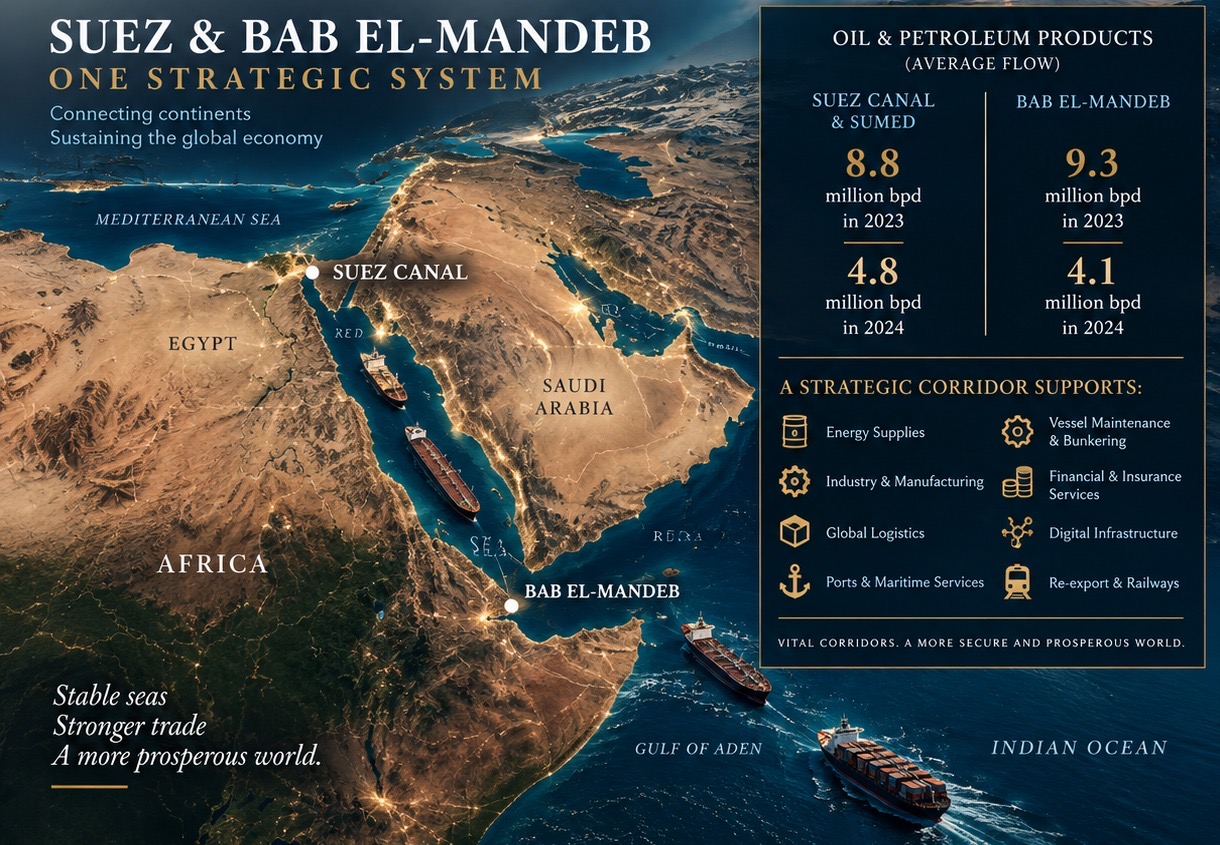
Suez & Bab el-MandebClick to enlarge ↗
One Strategic System

Suez & Bab el-Mandeb

The two passages form a linked strategic system between the Mediterranean, Red Sea, Gulf of Aden and Indian Ocean. Their stability supports energy supplies, container shipping and the commercial connection between three continents.

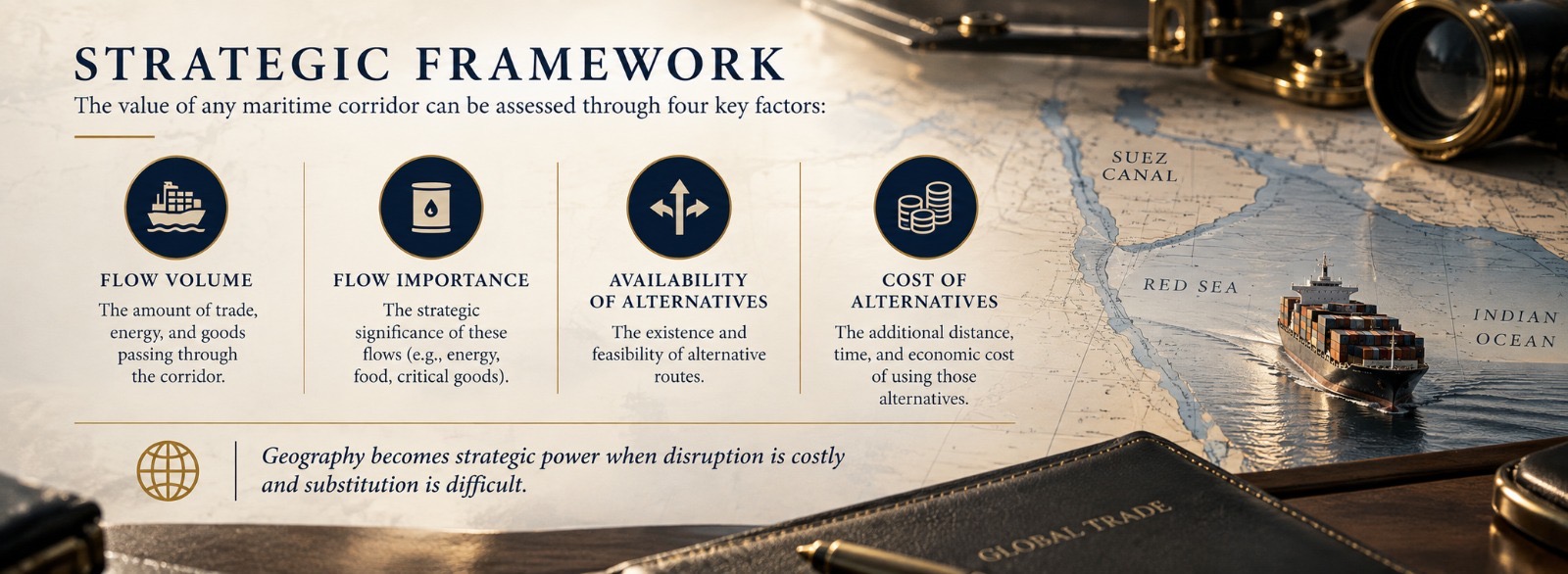
How the Value of a Corridor Is AssessedClick to enlarge ↗
Analytical Framework

How the Value of a Corridor Is Assessed

The study evaluates four decisive factors: flow volume, the strategic importance of those flows, the availability of alternative routes and the additional economic cost of using them.

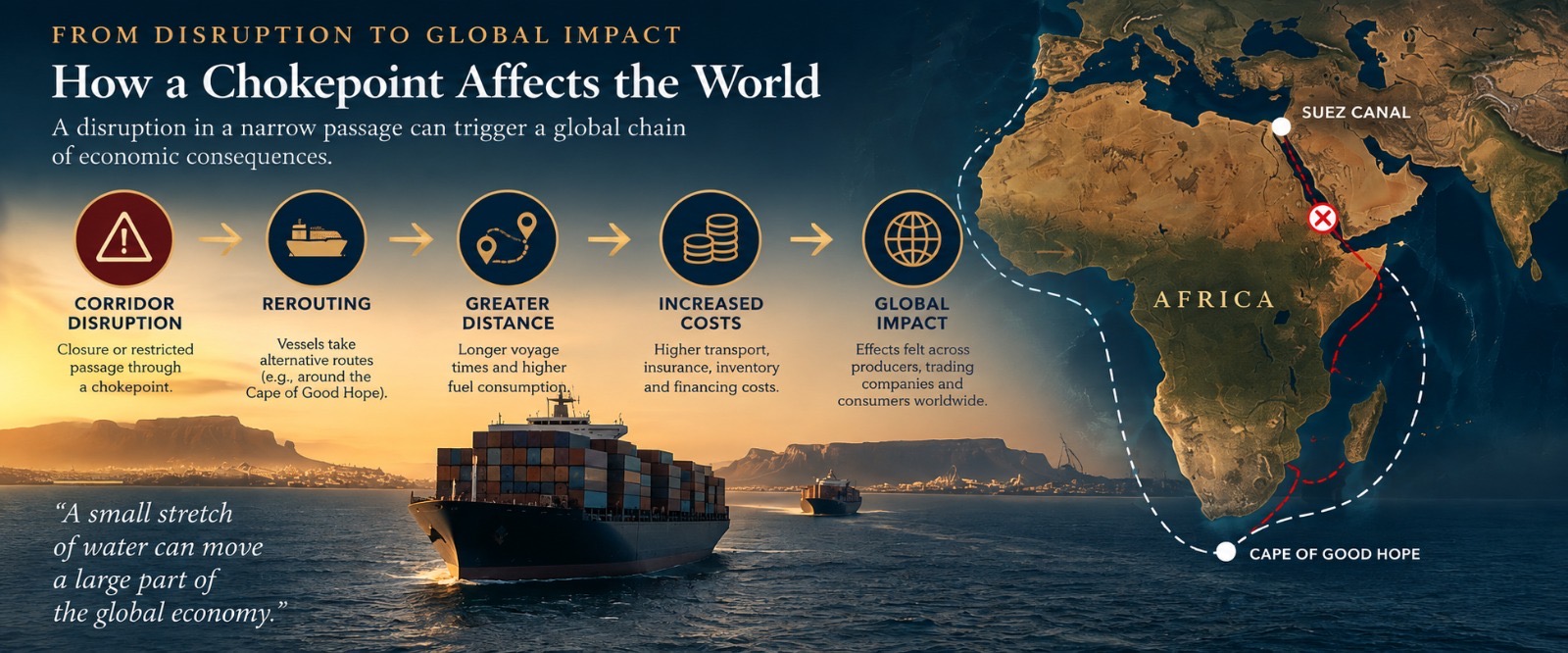
How a Chokepoint Affects the WorldClick to enlarge ↗
From Disruption to Global Impact

How a Chokepoint Affects the World

A disruption in a narrow passage forces rerouting, increases voyage distance and raises fuel, insurance, inventory and financing costs. A local interruption can therefore transmit a worldwide economic shock.

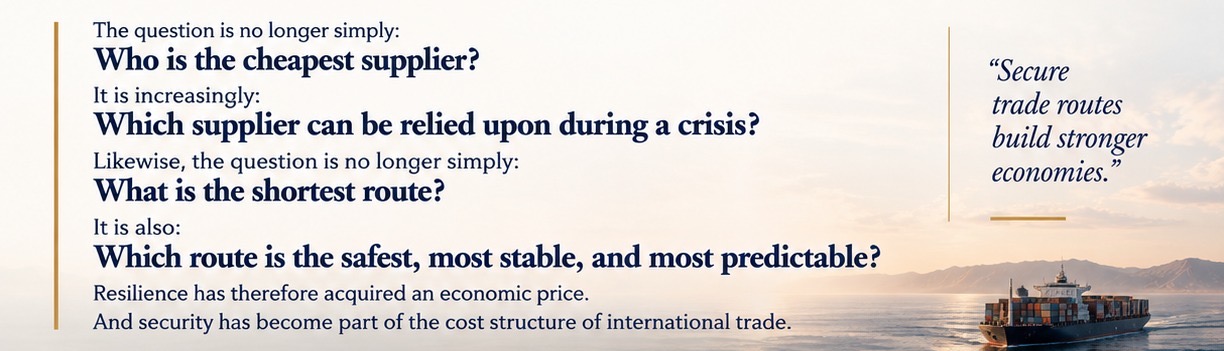
The Safest Route, Not Only the ShortestClick to enlarge ↗
Resilience Has an Economic Price

The Safest Route, Not Only the Shortest

Security and predictability have become part of the cost structure of international trade. Governments and businesses must now assess which suppliers and routes remain dependable during crisis.

Stable Seas. Stronger Trade.Click to enlarge ↗
Strategic Opportunity

Stable Seas. Stronger Trade.

A secure corridor supports far more than shipping: energy, manufacturing, ports, multimodal logistics, insurance, financial services, digital infrastructure and long-term regional prosperity.

The Global War for Trade Corridors publication cover
Featured Publication

The Global War for Trade Corridors

Chokepoints and the Reshaping of International Trade

The full paper will bring together the evidence, corridor comparisons, risk framework and policy conclusions behind this strategic preview. Request publication information from SHADWICK Research Center.

Request Full Study ↗View All Research →